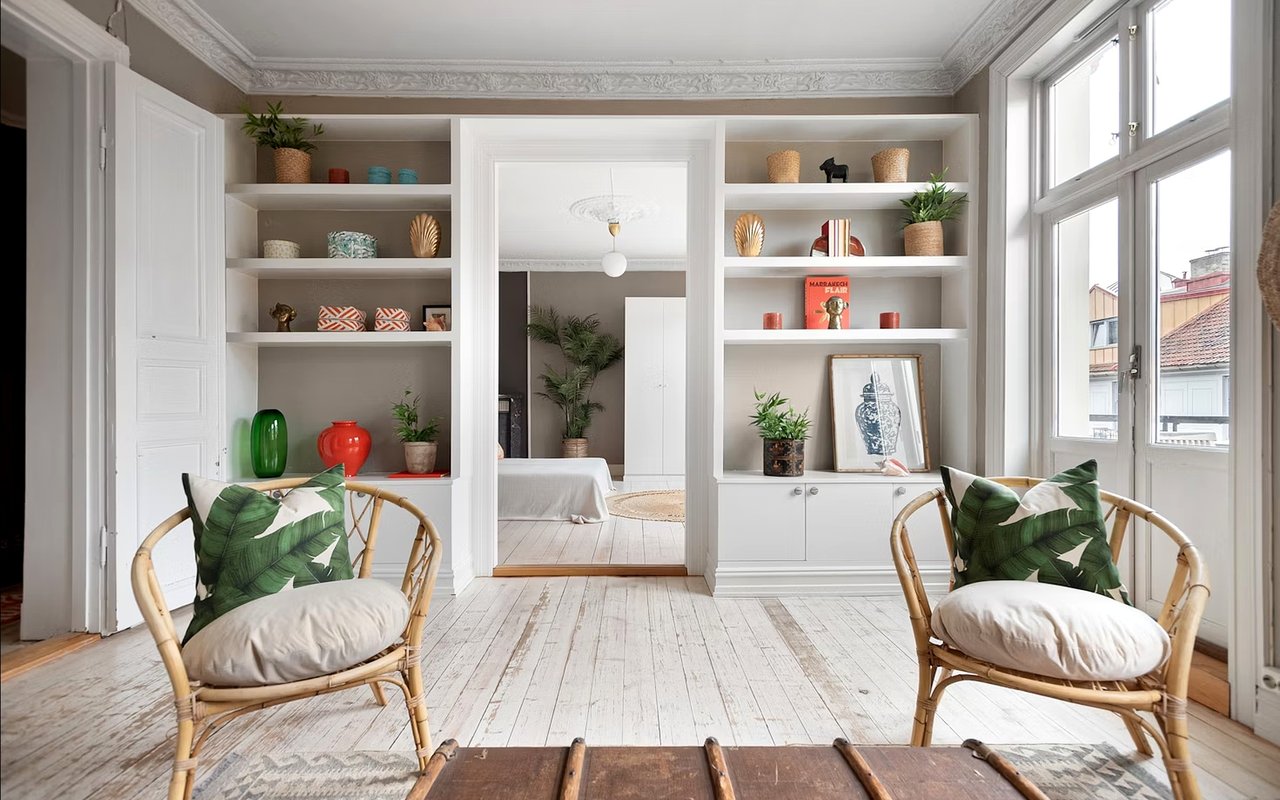
Interior Design Trends for 2026 That Boston Buyers Are Responding To
Warm minimalism, earthy color palettes, bespoke kitchens, and flexible livability across Boston's luxury housing stock
Boston Interior Design Trends / Quick Reference
2026 Boston Interior Design Trends at a Glance
- Warm Minimalism: Natural wood cabinetry, limewash walls, unlacquered brass over cold modernism
- Earthy Moody Palettes: Deep sage green, terracotta, warm clay, and navy in historic parlors and dining rooms
- Bespoke Functional Kitchens: Two-tone cabinets, leathered stone countertops, integrated panel appliances
- Flexible Living Spaces: Staged flex rooms, built-in study shelving, finished lower levels over rigid layouts
- Tactile Materials: Natural wool, linen, oak, and blackened steel over synthetic, high-gloss surfaces
- High Staging Impact: Cohesive, warm staging drives faster offers and higher buyer emotional connection
In 2026, Boston luxury home buyers are actively favoring warm, layered interiors over sterile, all-white modernism. Across Back Bay brownstones, South End bowfronts, and suburban Colonials, buyers respond positively to rich natural wood tones, limewash plaster, moody earthy paint palettes, and customized kitchens featuring leathered stone and unlacquered brass. Sellers who align staging and pre-market updates with these tactile trends see stronger showing traffic and shorter days on market.
Boston's real estate market has always rewarded homes that balance history with livability. The city's buyers are discerning, and in 2026, they are looking at more than square footage and location when they walk through a property. Interior design has become a decisive factor in how quickly homes move and how well they are received. Whether preparing to list a Back Bay brownstone, a South End condo, or a Newton Colonial, understanding what today's buyers in Boston are responding to can shape how you present your space and maximize sale value.
2026 Boston Interior Design Trend Matrix
A breakdown of key design movements, key material choices, ideal room applications, and buyer impact.
Design Trend | Key Material & Color Choices | Ideal Room Application | Buyer Market Impact |
|---|---|---|---|
Warm Minimalism | Walnut, white oak, limewash, unlacquered brass | Living rooms, primary suites, foyers | Honors historic architectural bones / feels curated |
Earthy Moody Palettes | Deep sage, terracotta, warm clay, navy, slate | Dining rooms, home offices, libraries | Creates strong emotional connection in listing photos |
Bespoke Functional Kitchens | Two-tone wood, leathered stone, panel appliances | Kitchens, butler pantries, coffee bars | Replaces default white quartz with high-craft luxury |
Flexible Multifunctional Spaces | Built-in shelving, hardwood flooring, mudroom storage | Secondary bedrooms, finished basements | Signals high daily livability for hybrid work styles |
Corcoran Pre-Market Advisory
Preparing your Boston home for sale?
Corcoran Property Advisors provides bespoke pre-listing guidance, highlighting high-ROI design updates and professional staging strategies that resonate with today's luxury buyers across Back Bay, Beacon Hill, the South End, and Cambridge.
Warm Minimalism Is Replacing Cold Modernism
The stark white kitchens and all-glass interiors that dominated design for much of the past decade have cooled considerably in buyer response. What's taking its place in Boston is something warmer and more layered: spaces that feel intentional without feeling fussy, and relaxed without feeling unfinished.
Warm minimalism draws on natural wood tones, textured plaster walls, linen upholstery, and a restrained material palette that still feels alluring. In a city full of older homes with plaster ceilings, exposed brick, and wood floors already in place, this aesthetic translates naturally. Buyers respond to it because it honors the bones of the home instead of covering them up.
What This Looks Like in Practice
- Cabinetry in warm wood tones like walnut, white oak, and cerused oak rather than painted white finishes.
- Walls treated with limewash, Roman clay, or Venetian plaster for subtle depth and organic texture.
- Rugs and upholstery in natural fibers, including wool, linen, and cotton, over synthetic alternatives.
- Lighting fixtures in aged brass, blackened steel, or unlacquered brass that develop a patina over time.
- Open shelving styled with intention: a mix of functional items and curated objects that add visual interest without clutter.
Earthy, Moody Color Palettes Are Making a Strong Impression
Greige is fading. In its place, Boston buyers are responding to interiors with a stronger point of view on color. Deep sage greens, terracotta, warm clay, deep browns, and inky navy tones have been showing up in listing photography that generates strong engagement and in properties that move quickly.
This trend aligns with something particular to Boston's housing stock. The city is full of homes with high ceilings, deep moldings, and substantial architectural detail that actually benefits from darker or richer wall colors. A parlor painted in a moody forest green reads as sophisticated rather than heavy when the trim is crisp and the light is right. Buyers walking into that space feel an immediate emotional response.
Colors Gaining Traction in Boston Listings Right Now
- Deep greens in dining rooms and home offices, particularly in shades that read warm rather than cool.
- Terracotta and clay tones in kitchens and breakfast rooms, especially when paired with natural stone.
- Warm white and cream replacing bright or stark white on trim and ceilings, creating a softer overall effect.
- Navy and slate in bedrooms and bathrooms, where the depth feels deliberate and restorative.
- Earthy neutrals in entryways that set a cohesive tone before buyers move further into the home.
The Kitchen Is Still the Room That Decides the Sale
Boston buyers have always prioritized kitchens, and that hasn't changed in 2026. What has shifted is the specific design language they are responding to. The all-white, high-gloss kitchen with waterfall quartz and stainless appliances is no longer the guaranteed crowd-pleaser it once was. Buyers have seen that configuration so many times that it reads as default rather than premium.
What's generating stronger responses are kitchens that feel more specific and crafted. Two-tone cabinetry, where upper and lower cabinets feature different finishes or colors, continues to perform well. Integrated appliance panels that give the kitchen a cleaner, more architectural look are increasingly expected at higher price points. Leathered or honed stone finishes are edging out polished surfaces in buyer preference because they are more forgiving and contribute to a tactile aesthetic.
Kitchen Features Boston Buyers Are Prioritizing
- Integrated or panel-ready appliances that create a seamless, built-in architectural appearance.
- Unlacquered brass, bronze, or hand-forged hardware on cabinetry and plumbing fixtures.
- Honed or leathered countertop finishes over high-polish surfaces.
- Open shelving or glass-front cabinets used selectively rather than throughout the entire space.
- Dedicated coffee or beverage bars integrated seamlessly into the floor plan.
Flexible, Functional Spaces Are a Serious Selling Point
Boston buyers in 2026 are thinking hard about how they actually use their homes, and they are rewarding properties that reflect that thinking in their layouts and finishes. The dedicated home office has settled into something more nuanced: buyers want at least one flexible room that can serve multiple functions without feeling like a compromise.
This has shifted how certain rooms are being staged and marketed. A third bedroom presented as a study or reading room with built-in shelving reads as more valuable than the same room with just a bed in it. A finished basement that shows as a media room or workout space captures the imagination more effectively than one left empty. Design details like built-in storage, proper task lighting, and continuous hardwood floors all reinforce a sense of livability.
About The Corcoran Property Advisors
The Corcoran Property Advisors is a premier luxury real estate advisory firm headquartered on Newbury Street in Boston. Specializing in Back Bay, Beacon Hill, the South End, Seaport, and Greater Boston luxury residential markets, Corcoran brings expert market intelligence, design advisory, and private pre-market access to home buyers and sellers.
Frequently Asked Questions About Boston Design Trends
Do interior design trends actually affect how much a Boston home sells for?
Yes. Homes that feel cohesive, current, and well-maintained consistently receive stronger offers and fewer days on market than comparable properties that feel dated. Targeted pre-listing updates in kitchens, living rooms, and primary bedrooms deliver strong returns on seller investment.
What interior updates are worth making before listing a home in Boston?
The highest-return pre-listing updates include repainting dated or stark white walls with warm neutrals, replacing cabinet hardware with unlacquered brass or bronze, upgrading lighting fixtures in primary spaces, and refinishing hardwood floors.
How much does professional staging matter if the interior is already updated?
Staging matters significantly even in updated homes. Buyers make emotional decisions during tours, and thoughtful staging demonstrates how rooms can be flexibly used while highlighting the property's scale, natural light, and architectural details.
What kitchen trends are most popular among Boston luxury buyers in 2026?
Boston buyers favor two-tone wood cabinetry (walnut or white oak), honed or leathered natural stone countertops, panel-integrated appliances, and unlacquered brass hardware over high-gloss all-white quartz kitchens.
Sources: American Society of Interior Designers (ASID), National Kitchen & Bath Association (NKBA), and Corcoran Property Advisors market analysis. Information verified for 2026.
Corcoran Property Advisors / Boston
Your Home Deserves a Strategy, Not Just a Listing
The gap between a home that sits and a home that sells fast often comes down to how well it connects with buyers from the moment they walk in. Reach out to Corcoran Property Advisors to prepare your property for maximum market impact.